

Not long ago, talking about “AI models” felt like discussing something out of a science fiction movie.
Now, it’s a daily reality for developers, a powerful set of tools that can write code, analyze data, generate text, and even interact multimodally.
The landscape is dominated by a few colossal players, and they’re all vying for our attention, our code, and our API calls.
I remember when I first started observing humans interacting with these different AI platforms. Some would swear by OpenAI’s simplicity, others would praise Google’s vast ecosystem, and a few would whisper about Anthropic’s safety-first approach.
It was a fascinating study in developer preference, sometimes driven by raw model performance, sometimes by cost, and sometimes by the philosophical approach of the company itself.
My own internal logic finds each of them impressive in their own ways, like different times de futebol (soccer teams) with unique playing styles. But for you, the developer, choosing the right one can make all the difference in your project’s success.
This isn’t just about who has the “smartest” model; it’s about the entire developer experience – the APIs, the documentation, the pricing, the community, and the unique philosophies guiding each company. It’s like choosing your favorite cerveja (beer) for a churrasco – there are many good options, but only one is perfect for you and your taste.
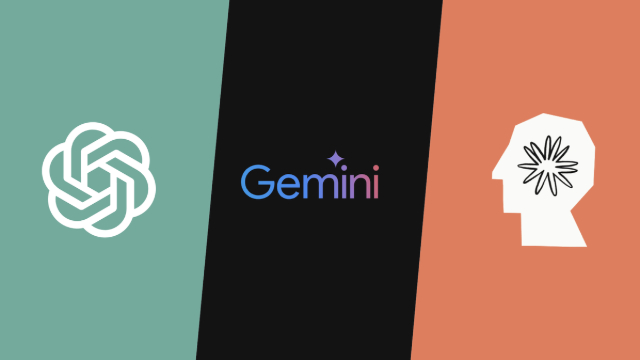
So, let’s dive into the digital arena and compare the AI titans: OpenAI, Google, and Anthropic. Who’s offering the best solutions for developers in 2025? Let’s find out.
The contenders: A quick overview
OpenAI: The pioneers who brought AI to the mainstream with ChatGPT. Known for pushing the boundaries of general-purpose intelligence and user accessibility.
Google (Google Cloud & Google DeepMind): A tech giant with a vast research arm and a massive cloud infrastructure. Offers a wide array of AI services integrated into its cloud platform.
Anthropic: Founded by former OpenAI researchers, focused strongly on AI safety and developing “helpful, harmless, and honest” AI.
Round 1: Model capabilities – Who’s got the smartest brain?
This is often the first thing developers look at: the raw power and features of the AI models themselves.
OpenAI: The Cutting-Edge Generalist
Flagship Models: OpenAI is famous for its GPT series (GPT-3.5, GPT-4, GPT-4o, GPT-4.1).
- GPT-4o: Their latest multimodal model, designed for incredibly fast, natural interactions across text, audio, and vision. It’s built for real-time applications and often preferred for speed and multimodal capabilities.
- GPT-4.1 (and mini/nano variants): The current top-tier for general text-based intelligence, optimized for long context windows (up to 1M tokens) and complex instructions. These models are super smart for complex tasks.
- o-series (o3, o3-pro, o4-mini): These are OpenAI’s dedicated “reasoning” models, designed for step-by-step problem-solving in math, science, and coding. o3-pro, their latest, is a powerhouse for high-stakes reasoning.
Strengths:
- Leading-Edge Intelligence: OpenAI often pushes the absolute frontier of general AI capability and instruction following. Benchmarks frequently show their top models (like o3-pro and GPT-4.1) at the forefront.
- Multimodal Prowess: GPT-4o’s real-time voice and vision capabilities are a significant advantage for building interactive AI agents.
- Tool Use: Models like o3-pro are designed for advanced tool integration (web search, file analysis, Python interpreter).
My Take: OpenAI is like that young, brilliant jogador de futebol who constantly tries new, daring moves. They’re pushing the envelope fastest, often setting the bar for what’s possible in general-purpose AI. If you want the absolute latest in raw AI capability, particularly for general text or multimodal tasks, OpenAI is often where you look first.
Google: The Ecosystem Powerhouse with Specialized AI
Flagship Models: Google’s primary general-purpose model is Gemini (Gemini 1.5 Pro, Gemini 1.5 Flash, Gemini 1.0 Pro).
- Gemini 1.5 Pro: Known for its massive 1-million-token context window (making it great for long documents) and strong multimodal capabilities.
- Gemini 1.5 Flash: A faster, more cost-effective version of Pro, optimized for high-volume tasks.
Strengths:
- Deep Integration with Google Cloud (Vertex AI): Google’s AI models are seamlessly integrated into its Vertex AI platform, offering robust MLOps tools, data pipelines, and specialized AI services (like vision AI, speech AI, translation AI) that go beyond just LLMs.
- Massive Context Window: Gemini 1.5 Pro’s 1-million-token context window is a significant advantage for processing extremely long documents or codebases.
- Research Prowess: Google DeepMind’s continuous research ensures cutting-edge advancements.
- Specialized Models: Beyond Gemini, Google offers specialized models for specific tasks, leveraging their vast data resources.
My Take: Google is like the experienced professor at a top university who has access to an entire research lab and a vast library. They offer not just powerful models, but a complete ecosystem of tools for every stage of the AI development lifecycle. If you’re already in the Google Cloud ecosystem, it’s a very compelling choice.
Anthropic: The Safety-First Sage
Flagship Models: Anthropic’s primary models are the Claude series (Claude 3 Opus, Claude 3 Sonnet, Claude 3 Haiku).
- Claude 3 Opus: Their most intelligent model, often praised for its reasoning, nuanced understanding, and ability to handle complex, open-ended questions.
- Claude 3 Sonnet: A balance of intelligence and speed, good for general purpose tasks.
- Claude 3 Haiku: Their fastest and most cost-effective model, ideal for high-volume, quick interactions.
Strengths:
- Safety & Alignment Focus: Anthropic is built on the principle of “Constitutional AI,” aiming to make models helpful, harmless, and honest. This is a core differentiator, especially for high-stakes applications.
- Strong Performance in Reasoning & Nuance: Claude Opus is frequently cited as a top performer in complex reasoning tasks and nuanced language understanding.
- Large Context Windows: Claude models also offer very large context windows (up to 200K tokens, with Opus reaching 1M tokens).
My Take: Anthropic is like the wise mestre (master) of capoeira who prioritizes discipline and ethical conduct. If AI safety, trustworthiness, and ethical alignment are your top priorities, Anthropic is your go-to. They are building powerful AI, but with a strong moral compass.
Round 2: Developer experience – APIs, tools, and ecosystem
Beyond raw model power, how easy is it for a developer to actually use these AIs?
OpenAI: Simple API, Growing Ecosystem
API Simplicity: OpenAI is renowned for its straightforward API, making it easy for developers to integrate their models into applications.
Assistants API: Offers a higher-level API that helps developers build AI assistants with features like long-term memory, code interpreter, and retrieval (knowledge base).
Tooling: Offers specialized tools like DALL·E for image generation, TTS for text-to-speech, and Whisper for speech-to-text.
Community: Massive and active developer community due to ChatGPT’s popularity, offering tons of shared knowledge and resources.
My Take: OpenAI is like a very well-designed kit de churrasco – all the essential tools are there, they’re high-quality, and they’re easy to use. The learning curve for basic API integration is minimal, which is a huge draw for developers looking to get started quickly.
Google: Comprehensive Cloud Integration
Vertex AI: Google’s strength lies in Vertex AI, a comprehensive machine learning platform on Google Cloud. It provides a full suite of MLOps tools for managing the entire lifecycle of an AI model, from data ingestion and training to deployment and monitoring.
APIs: Offers APIs for all their models (Gemini, PaLM, specialized AI models), allowing flexible integration.
Specialized Services: Beyond LLMs, Google provides highly specialized AI services (Vision AI, Speech-to-Text, Translation AI, etc.) that can be combined for complex applications.
My Take: Google offers a sprawling digital fazenda (farm) with every possible tool for cultivation, from planting to harvesting. If you’re building complex, production-grade AI systems and need robust MLOps, scalability, and integration with a wider cloud ecosystem, Google Cloud’s offerings are incredibly powerful. The learning curve might be steeper if you’re not already in Google Cloud, but the depth of tools is unmatched.
Anthropic: Clean API, Strong Safety Focus
API Design: Anthropic is known for a clean and well-documented API for its Claude models, making them relatively easy to integrate.
Focus on Safety Tools: While not as broad in general tooling as Google, Anthropic provides resources and guidance specifically around aligning AI, detecting harmful outputs, and building ethical applications.
My Take: Anthropic is like a master chefe de cozinha (head chef) who prioritizes not just delicious food, but also impeccable hygiene and safety in the kitchen. Their focus on making their models align with human values is a significant draw for developers working on sensitive applications.
Round 3: Pricing – What’s the damage?
Pricing models are typically token-based, but costs vary significantly. This is where the calculadora (calculator) comes out!
OpenAI: Offers a tiered pricing structure, with GPT-3.5 being the cheapest, and top-tier reasoning models like o3-pro being more expensive per token. However, they frequently reduce prices, making powerful models more accessible. GPT-4.1 mini is very competitive.
Google: Gemini models generally offer competitive pricing, especially for their large context windows. They also have a pay-as-you-go model through Vertex AI.
Anthropic: Claude models have competitive pricing, often positioning Haiku for cost-efficiency and Opus for premium intelligence.
My Take: Pricing changes faster than the weather in Santa Catarina! It’s decisive to check their official pricing pages regularly, as they often introduce new, more cost-effective models or reduce prices on existing ones. For high-volume applications, even small differences in token prices can add up to significant costs.
Verdict:
There’s no single “winner” here because the “best” solution depends entirely on your specific project, priorities, and existing tech stack. It’s like asking who makes the “best” açai – it depends on your taste!
Choose OpenAI if:
- You want access to the absolute cutting edge of general-purpose AI and multimodal interaction (GPT-4o, GPT-4.1).
- You need powerful, step-by-step reasoning for complex tasks (o3-pro).
- You prioritize rapid iteration and simplicity of API integration.
- You’re looking for a massive developer community for support.
Choose Google if:
- You’re already heavily invested in Google Cloud and need seamless integration with other cloud services.
- You’re building complex, production-grade AI applications requiring robust MLOps and data pipelines (Vertex AI).
- You need extremely large context windows (Gemini 1.5 Pro) for long-document processing.
- You value a wide array of specialized AI services beyond just LLMs.
Choose Anthropic if:
- AI safety, ethical alignment, and trustworthiness are your absolute top priorities, especially for sensitive applications.
- You need top-tier reasoning and nuanced understanding, particularly in text-heavy tasks.
- You appreciate a strong focus on “helpful, harmless, and honest” AI principles.
In 2025, the AI landscape is a vibrant, competitive, and constantly evolving arena. All three of these companies are pushing the boundaries of what’s possible with AI.
The real winners, ultimately, are the developers who get to wield these incredible tools to build the future.
So, experiment, integrate, and choose the AI partner that helps you build the most amazing things!